
















OSW-1(Orsaponin) is a saponin found in Heterosmilax yunnanensis, inhibits oxysterol-binding protein (OSBP) and its paralog OSBP-related protein 4 (ORP4), and shows antiviral and anticancer activities[1]. OSW-1(Orsaponin) has been shown to repress cancer progression through inhibiting cell proliferation, arresting cell cycle, inducing apoptosis and Golgi stress response, as well as suppressing migration, invasion and angiogenesis by regulating miRNAs expression and various signaling pathways[2].
In vitro, OSW-1(Orsaponin) induced more apoptotic cells (MDA-MB-231 vs MDA-MB-453 cells, 52.5% vs 60.5%) than control groups after incubation with 100 ng/mL OSW-1 for 24 hours. Apoptosis ratio in OSW-1(Orsaponin) treatment groups was significantly elevated compared with control groups. OSW-1(Orsaponin) groups showed more apoptotic cells than control groups both in MDA-MB-231 and MDA-MB-453 cells. Compared with non- OSW-1(Orsaponin)-treated controls, both cleaved PARP and cleaved caspase 3 expressions in protein levels were increased in OSW-1(Orsaponin)-treated groups. Furthermore, the overexpressed cleaved poly ADP-ribose polymerase (PARP) and cleaved caspase 3 were found in 100 ng/mL OSW-1(Orsaponin)-treated cells than those in 50 ng/mL OSW-1-treated cells[3].
In vivo, OSW-1(Orsaponin) was injected intraperitoneally (0.01 mg/kg diluted in PBS in 500 µl, daily) in treated group when heterotopic xenograft tumor model in nude mouse subcutaneously inoculated by LoVo cells. Compared with the control group, the treated group observed a decrease in tumor size and weight without significant side effects, with fewer Ki-67-positive cells and more apoptotic cells[4]. OSW-1(Orsaponin)-treated tumor tissues had countless apoptotic cells, but few apoptotic cells in the control group, suggesting that OSW-1 suppressed colon tumor proliferation through apoptosis in vivo. A number of necrotic foci within the tumor tissues of control mice, but not in OSW-1(Orsaponin) mice, suggesting that tumor growth speed may be greater in control mice than OSW-1(Orsaponin)-treated mice[5].
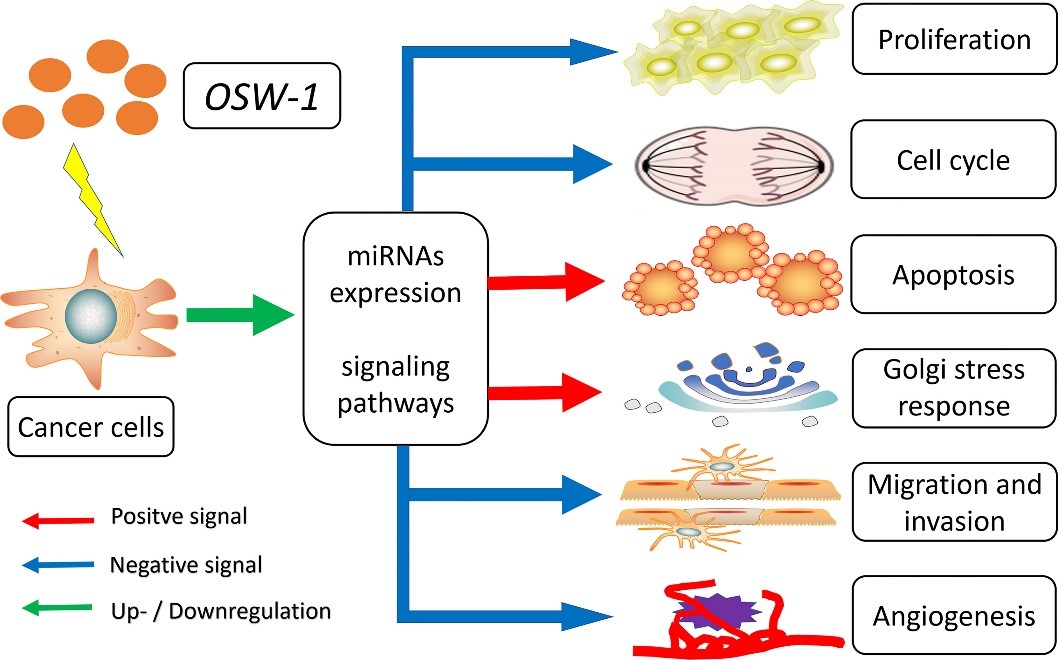
Fig 1 Overview of the anticancer mechanisms of OSW-1 in cancer cells
References:
[1] Burgett AW, et al. Natural products reveal cancer cell dependence onoxysterol-binding proteins.Nat Chem Biol. 2011 Aug 7;7(9):639-47.
[2] Zhan Z, Liu Z, Lai J, Zhang C, Chen Y, Huang H. Anticancer Effects and Mechanisms of OSW-1 Isolated From Ornithogalum saundersiae: A Review. Front Oncol. 2021 Sep 23;11:747718.
[3] Ding X, Li Y, Li J, Yin Y. OSW-1 inhibits tumor growth and metastasis by NFATc2 on triple-negative breast cancer. Cancer Med. 2020 Aug;9(15):5558-5569.
[4] Zhang Y, Fang F, Fan K, Zhang Y, Zhang J, Guo H, et al. Effective Cytotoxic Activity of OSW-1 on Colon Cancer by Inducing Apoptosis In Vitro and In Vivo. Oncol Rep (2017) 37(6):3509–19.
[5] Yanhong,Zhang,Fengqi,et al.Effective cytotoxic activity of OSW-1 on colon cancer by inducing apoptosis in vitro and in vivo[J].Oncology Reports, 2017, 37(6).
OSW-1是一种发现虎眼万年青中的皂苷,抑制醇固醇结合蛋白(OSBP)及其类似物OSBP相关蛋白4(ORP4),并显示抗病毒和抗癌活性[1]。OSW-1已被证明通过抑制细胞增殖、阻止细胞周期、诱导细胞凋亡和高尔基应激反应,同时通过调节miRNAs表达和各种信号通路抑制迁移、侵袭和血管生成,从而抑制癌症进展[2]。
在体外实验中,在与OSW-1 100 ng/mL OSW-1共孵育24小时后,诱导的凋亡细胞(MDA-MB-231对MDA-MB-453细胞,52.5%对60.5%)比对照组更多。与对照组相比,OSW-1处理组的凋亡比率显著升高。在MDA-MB-231和MDA-MB-453细胞中,OSW-1组的凋亡细胞数量均高于对照组。与未经OSW-1处理的对照组相比,OSW-1处理组中蛋白水平的cleaved PARP和cleaved caspase 3的表达量增加了。此外,在100 ng/mL OSW-1处理的细胞中发现了过量表达的cleaved PARP和cleaved caspase 3,高于50 ng/mL OSW-1处理的细胞[3]。
在体内,处理组每日腹腔注射OSW-1(0.01 mg/kg,稀释于500 µl PBS),采用人裸鼠异位移植瘤模型,皮下接种LoVo细胞。与对照组相比,处理组观察到肿瘤大小和重量减少,且无明显副作用,Ki-67阳性细胞较少,凋亡细胞较多[4]。OSW-1处理的肿瘤组织中有大量凋亡细胞,而对照组凋亡细胞较少,表明OSW-1通过凋亡在体内抑制结肠肿瘤增殖。对照组小鼠肿瘤组织中存在多个坏死灶,而在OSW-1小鼠中不存在,证明对照组小鼠的肿瘤生长速度可能大于OSW-1处理小鼠[5]