
















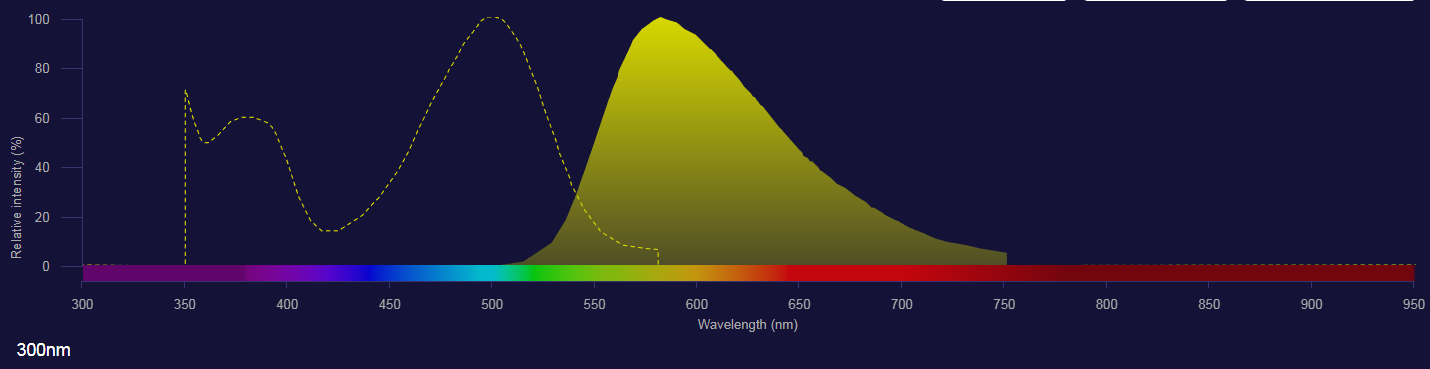
MitoSOX Red is a live cell fluorescent probe targeting mitochondria with maximum excitation/emission light of 510/580 nm. MitoSOX Red has cell membrane permeability and can quickly and selectively target mitochondria after entering cells. After entering mitochondria, MitoSOX Red is easily oxidized by superoxide and produces strong red fluorescence after combining with nucleic acids in mitochondria. MitoSOX Red can be used as a fluorescent indicator to specifically detect superoxide[1-2].
Dihydroethidium, also called hydroethidine (HE), can be oxidized by reactive species and subsequently binds to DNA to produce fluorescence. MitoSOX Red is a dihydroethidium derivative with a cationic triphenylphosphonium moiety. This positively charged probe rapidly accumulates in mitochondria and can therefore be used to monitor superoxide/ROS production within mitochondria by fluorometry, microscopy or flow cytometry[3]. For example, in NK cells, MitoSOX red can observe the distribution of mitochondrial ROS[1]. Confocal microscopy imaging shows that in H9c2 cells treated with paraquat, the fluorescence intensity of MitoSOX Red-labeled mitochondria increases significantly[4].
References:
[1] Jin F, Wu Z, Hu X, Zhang J, Gao Z, Han X, Qin J, Li C, Wang Y. The PI3K/Akt/GSK-3β/ROS/eIF2B pathway promotes breast cancer growth and metastasis via suppression of NK cell cytotoxicity and tumor cell susceptibility. Cancer Biol Med. 2019 Feb;16(1):38-54.
[2] Milliken A S, Nadtochiy S M, Brookes P S. Inhibiting succinate release worsens cardiac reperfusion injury by enhancing mitochondrial reactive oxygen species generation[J]. Journal of the American Heart Association, 2022, 11(13): e026135.
[3] Kauffman ME, Kauffman MK, Traore K, Zhu H, Trush MA, Jia Z, Li YR. MitoSOX-Based Flow Cytometry for Detecting Mitochondrial ROS. React Oxyg Species (Apex). 2016;2(5):361-370.
[4] Mukhopadhyay P, Rajesh M, Yoshihiro K, et al. Simple quantitative detection of mitochondrial superoxide production in live cells[J]. Biochemical and biophysical research communications, 2007, 358(1): 203-208.
MitoSOX Red是一种靶向线粒体的活细胞荧光探针,最大激发光/发射光为510/580 nm。MitoSOX Red具有细胞膜渗透性,进入细胞后能够快速且选择性地靶向线粒体,进入线粒体后MitoSOX Red易被超氧化物氧化,与线粒体内核酸结合后,产生强烈的红色荧光。MitoSOX Red可以作为荧光指示剂,特异性检测超氧化物[1-2]。
二氢乙锭,也称为氢化乙锭 (HE),可以被活性物质氧化,随后与DNA结合产生荧光。MitoSOX Red是带有阳离子三苯基鏻部分的二氢乙锭衍生物。这种带正电的探针在线粒体中快速积累,因此可用于通过荧光测定、显微镜或流式细胞术检测线粒体内超氧化物/ROS的产生[3],例如,在NK细胞中,MitoSOX Red可以观察线粒体ROS的分布[1];共聚焦显微成像显示,在用百草枯处理的 H9c2 细胞中,MitoSOX Red标记的线粒体荧光强度显著增加[4]。